
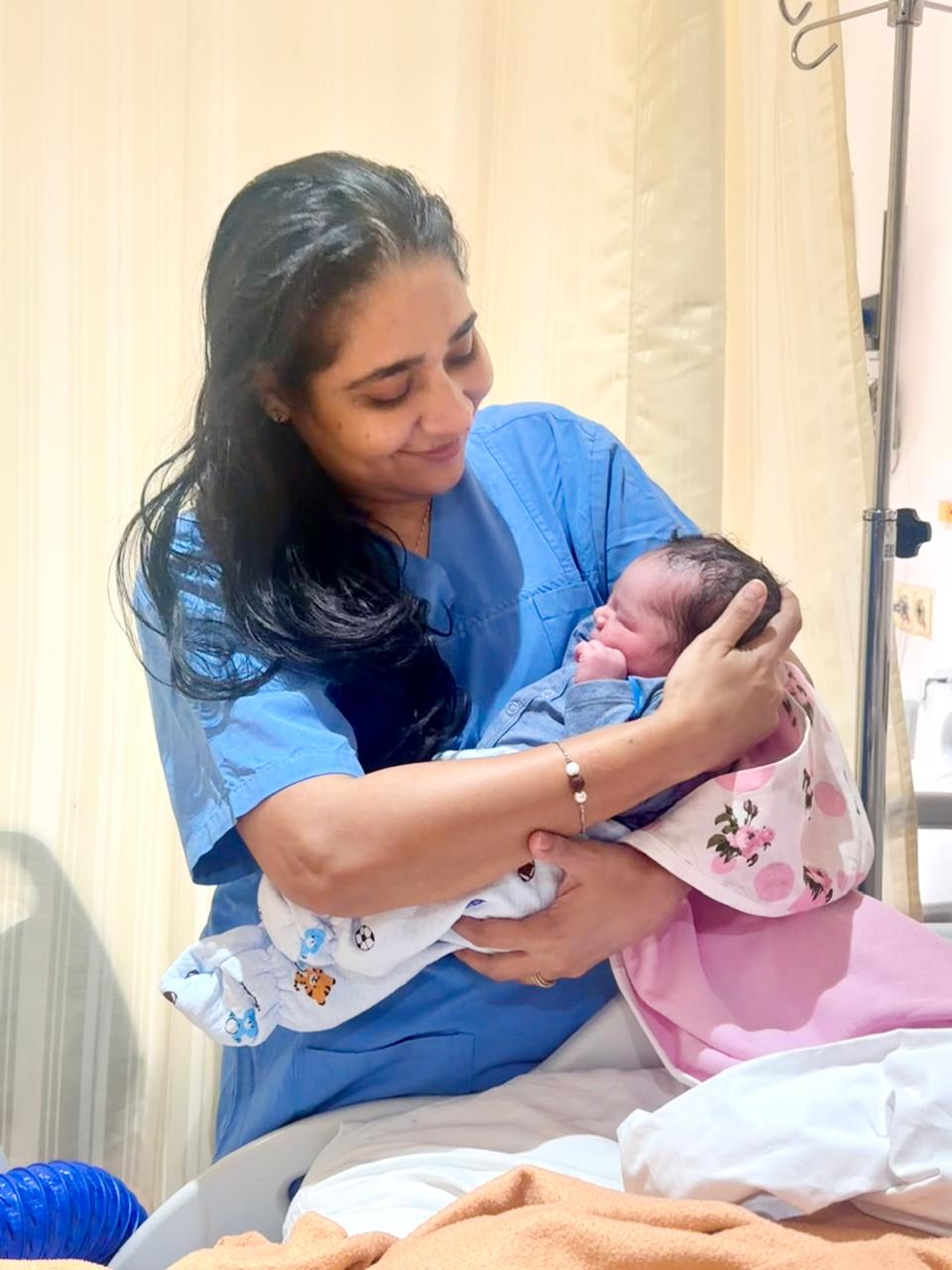
A positive test brings joy, and usually a long list of questions. What can I eat? Which scans do I need? Is this cramp normal? Antenatal care in Delhi with Dr. Kavita Manchanda gives you regular checkups, the right tests at the right time, and one doctor you can ask, from the first visit to the last weeks of pregnancy.
She is an obstetrician-gynaecologist as well as a fertility specialist. Many of the couples she sees for antenatal care conceived naturally. Many others conceived after IUI or IVF with her, and it helps a great deal when the same doctor carries on.
Who this prenatal care is for
- women with a new pregnancy who want a regular pregnancy care doctor in Delhi
- couples who conceived after IUI, IVF or other fertility treatment
- women with a past miscarriage, who often feel anxious in the early weeks (see recurrent miscarriage causes and care)
- women with PCOS, thyroid problems, diabetes, high blood pressure or other conditions that need watching during pregnancy
- women pregnant with twins
If you are not pregnant yet but planning, start with preconception care in Delhi. A few months of preparation make the early weeks of pregnancy smoother.
What routine antenatal care includes
Antenatal care follows a pattern, adjusted to you. Our antenatal care guide by trimester explains each stage in detail. In brief:
First trimester (up to 13 weeks)
Your first pregnancy checkup confirms the pregnancy and works out your due date. Dr. Kavita takes a full history, checks blood pressure and weight, and orders routine blood tests: blood count, blood group, thyroid, blood sugar, and screening for infections such as HIV, hepatitis B and syphilis. Thalassemia screening is done if it was not done before. Folic acid continues. An early scan confirms the heartbeat and the number of babies, and the NT scan with blood screening is offered at 11 to 14 weeks.
Second trimester (14 to 27 weeks)
This is often the easiest stretch. The anomaly scan at around 18 to 20 weeks checks the baby's development in detail. Iron and calcium supplements usually start. A glucose test is done, typically between 24 and 28 weeks, to look for gestational diabetes. The Td (tetanus) vaccine is given as per the schedule. We check blood pressure, weight and the baby's growth at each visit.
Third trimester (28 weeks to delivery)
Visits become more frequent. We watch the baby's growth and movements, your blood pressure and your blood count. Growth scans are added when needed. Towards the end, we talk about signs of labour, when to come in, and your plan for delivery, so nothing is left to the last minute.
A common schedule is roughly monthly visits until 28 weeks, every two weeks until 36 weeks, and weekly after that. Your schedule may differ.
Pregnancy after fertility treatment
A pregnancy after IVF or IUI is precious, and couples are often more anxious in the first weeks. We understand that. After a positive result, Dr. Kavita plans an early scan to confirm the pregnancy is in the uterus and to count the heartbeats. If you were on progesterone or other support medicines after IVF treatment in Delhi or IUI treatment in Delhi, she tells you clearly how long to continue and when to stop.
From there, most IVF and IUI pregnancies are looked after like any other. Twins and older mothers need closer watching, and she plans visits and scans to suit. Nandlal Kumar, who wrote about having twins, and Vimal Kumar and Neha, who conceived after eight years of marriage, are among the patients who have shared their experience in Google reviews.
High-risk pregnancy care
Some pregnancies need more attention. That may be because of high blood pressure, diabetes, thyroid disease, a previous preterm birth or miscarriage, twins, or concerns about the baby's growth. In these cases Dr. Kavita monitors you closely, with more frequent checkups, tests and scans. When specialist input is needed, for example from a physician, endocrinologist or fetal medicine expert, she coordinates that care and keeps track of the overall plan, so you are not left managing several doctors on your own.
Women with PCOS have a higher chance of gestational diabetes, so we keep an eye on sugar. Our guide to PCOS and fertility touches on this.
Your part between visits
Antenatal care works best when you tell us things early. Call if you have bleeding, fluid leaking, severe headache, blurred vision, swelling of the face or hands, fever, or if the baby moves less than usual in the later months.
Day to day, eat regular home-cooked meals, take your supplements, and drink plenty of water, especially in the Delhi summer. A vegetarian diet is fine in pregnancy with enough protein from dal, paneer, curd and milk, and iron supplements where needed. Gentle walking is good for most women. Our article on lifestyle factors that affect fertility has more on diet and habits that carry into pregnancy.
What affects the cost of antenatal care
Antenatal care is spread over around nine months, so the cost builds up gradually. It depends mainly on:
- how many visits you need, which is more for twins or high-risk pregnancies
- the number and type of scans
- blood tests and screening tests chosen
- supplements and any medicines
- specialist consultations, if needed
We order tests and scans for a reason and explain each one before it is done.
Why women choose Dr. Kavita as their obstetrician in North Delhi
Dr. Kavita Manchanda holds an MBBS, MS (OBG), DNB (OBG) and FNB (Reproductive Medicine), with more than 15 years of experience in obstetrics, gynaecology and fertility. She consults in Hindi and English and has a 5.0 rating on Google. Patients often mention how she listens. Rashi Chaudhary said she felt "comfortable, heard, and reassured during a stressful time". You can read about her qualifications and experience on her profile.
Antenatal care in Delhi at Kamla Nagar, North Delhi
If you have a positive test, or you are already pregnant and looking for antenatal care in Delhi close to home, Dr. Kavita sees patients at Penicillin Clinic, A-86, Central, Block A, Kamla Nagar, New Delhi. Bring your pregnancy test result and any earlier reports. Book your first antenatal care visit and we will plan the checkups from there.
Frequently asked questions
Book a visit within the first few weeks of a missed period. An early visit confirms the pregnancy, starts the right supplements and plans the first scan. After IVF or IUI, your doctor will usually give you a specific date for the first scan.
A common pattern is about once a month until 28 weeks, every two weeks until 36 weeks, and then weekly until delivery. You may be seen more often if your pregnancy needs closer monitoring.
Usually an early scan to confirm and date the pregnancy, an NT scan at 11 to 14 weeks, an anomaly scan at around 18 to 20 weeks, and growth scans later if needed. Your doctor may add others based on your history.
Not automatically. Many IVF pregnancies progress like any other. Twins, an older mother or conditions such as high blood pressure or diabetes may need closer monitoring, which your doctor will plan with you.
Yes. She manages pregnancies including those conceived after IUI or IVF, so the doctor who knows your fertility history also follows your pregnancy.

Dr. Kavita Manchanda
MBBS, MS (OBG), DNB (OBG), FNB (Reproductive Medicine). Fertility and IVF specialist with 15+ years of experience in male and female fertility, IUI, IVF, TESA, laparoscopy, hysteroscopy, pre-conception and antenatal care. Consults at Penicillin Clinic, Kamla Nagar, New Delhi.
This page is for general information and does not replace a personal consultation. Every patient is different, so please speak to a qualified doctor about your situation.