
Fibroids turn up on pelvic ultrasounds all the time. Many women in their thirties have at least one and never find out. So when a scan report mentions a fibroid just as you are planning a family, of course it worries you.
Here is what we tell couples in the clinic. A large number of women with fibroids conceive and carry healthy pregnancies with no treatment at all. Size matters, and so does the number of fibroids. Location matters most. So the real question is not "do I have a fibroid?" but "is this one in the way?"
What are fibroids?
Fibroids (also called myomas or leiomyomas) are non-cancerous growths of the uterine muscle. Some are the size of a pea. Others grow big enough to change the shape of the abdomen. Oestrogen and progesterone drive their growth, which is why they appear in the reproductive years and often shrink after menopause.
Doctors describe fibroids by where they sit:
- Submucosal fibroids bulge into the uterine cavity, where the embryo implants.
- Intramural fibroids grow within the muscular wall of the uterus.
- Subserosal fibroids grow on the outer surface of the uterus, sometimes on a stalk.
It is common to have more than one type at once.
How fibroids can affect fertility
Not every fibroid behaves the same way. Position is the deciding factor.
Fibroids inside the cavity
Submucosal fibroids have the clearest link with reduced fertility. They can alter the lining, get in the way of implantation and are linked with a higher chance of miscarriage. If you are trying to conceive, we usually recommend removing them.
Fibroids in the wall
Intramural fibroids may matter if they are large or if they press on and distort the cavity. Small ones that leave the cavity normal are often best left alone. This is a grey zone, and it needs a careful look at your own scans rather than a blanket rule.
Fibroids on the outside
Subserosal fibroids rarely affect conception. If they grow large they can still cause pressure or pain, which can be a separate reason to treat them.
Occasionally a fibroid blocks the opening of a fallopian tube. Others cause heavy periods and anaemia. Both are worth sorting out before a pregnancy.
Common symptoms
Many fibroids cause no symptoms whatsoever. When they do, you may notice:
- Heavy or prolonged periods, sometimes with clots
- Tiredness or breathlessness from iron-deficiency anaemia
- Pelvic pressure, bloating or a feeling of fullness
- Frequent urination or constipation from pressure on the bladder or bowel
- Pain during periods or intercourse
- Difficulty conceiving or repeated early pregnancy loss
Any of these deserves a visit to a gynaecologist, even if a baby is not on your mind just yet. If early losses are your main worry, our guide to recurrent miscarriage causes and care covers the other causes we check for.
How fibroids are diagnosed
We start by talking: your periods, your symptoms and how long you have been trying. Then:
- Pelvic ultrasound, usually transvaginal, to measure the number, size and position of the fibroids.
- 3D ultrasound or saline sonography in some cases, to see the exact shape of the cavity.
- MRI occasionally, when there are many fibroids or surgery is being planned.
- Hysteroscopy, where a thin camera passes through the cervix to look directly inside the uterus. It can confirm a submucosal fibroid and often remove it in the same sitting.
A fibroid is only one piece of the picture. We will usually also check your ovarian reserve and your tubes, and ask for your husband's semen analysis. Our guide to female infertility causes and treatment explains the wider work-up.
Treatment options when you want to conceive
Treatment is planned around you. The aim is simple: protect the uterus and give you the best chance of a healthy pregnancy.
Watchful waiting
Small fibroids outside the cavity, with no troublesome symptoms, often need nothing more than a scan every so often while you keep trying.
Medicines
Some medicines cut down bleeding or shrink fibroids for a while, for example before surgery or to correct anaemia. They do not remove fibroids. Several of them also stop you getting pregnant while you take them, so they are a short-term step.
Hysteroscopic myomectomy
For fibroids inside the cavity, hysteroscopic removal is the preferred route. There is no cut on the abdomen. A fine instrument passed through the cervix shaves the fibroid away, and most women go home the same day. You can read more about hysteroscopy for infertility.
Laparoscopic myomectomy
Intramural or subserosal fibroids that need to come out can often be removed by laparoscopy (keyhole surgery). The fibroid is taken out through small cuts and the uterine wall is stitched carefully in layers. Compared with open surgery there is usually less pain and a shorter hospital stay, and you are back to normal sooner. Our article on fertility laparoscopy in Delhi describes the procedure step by step.
Open myomectomy
Very large or numerous fibroids may still need an open operation. The goal does not change: take out the fibroids and keep the uterus.
Hysterectomy removes the uterus, so it is not an option if you want to conceive. Uterine artery embolisation is also not usually the first choice for women planning a pregnancy.
What happens after treatment
Recovery depends on the procedure. After hysteroscopy, most women are back at work in a day or two. After laparoscopic myomectomy, light activity is usually fine within a week or two.
We will tell you how long to wait before trying, usually a few months after surgery on the uterine wall. If IVF treatment is part of your plan, embryo transfer is timed around your healing. Once you are pregnant after a myomectomy, your obstetrician will keep a closer eye on you and talk through the safest way to deliver.
Fibroids can come back. So once you are cleared, it usually makes sense to start trying fairly soon.
Fibroid assessment with Dr. Kavita in Kamla Nagar, Delhi
Dr. Kavita Manchanda (MS, DNB OBG, FNB Reproductive Medicine) assesses and treats fibroids with minimally invasive surgery, including laparoscopy and hysteroscopy, as part of her fertility and women's care services. If you want a gynaecologist in Kamla Nagar or a fertility clinic in North Delhi that looks at your fibroid alongside your whole fertility plan, she consults at Penicillin Clinic, close to Delhi University North Campus, Shakti Nagar and Civil Lines, in Hindi and English. Book a consultation and bring your scan with you.
Frequently asked questions
No. Plenty of fibroids are small, sit on the outer wall of the uterus and make no difference to conception. We usually think about treatment when a fibroid pushes into the cavity, is large, causes heavy bleeding or pain, or when nothing else explains why you have not conceived. The decision rests on your scans, your symptoms and the rest of your fertility work-up.
That depends on the operation. If a fibroid inside the cavity was removed by hysteroscopy, many women can try again within a few months. If the uterine wall was cut and stitched, by laparoscopy or open surgery, the usual advice is to wait around three to six months so the scar heals well. Your surgeon will give you a date based on what was actually done.
Yes. The tendency to form fibroids stays until menopause, so new ones can grow after a myomectomy. That is one reason we often suggest trying to conceive fairly soon after recovery instead of putting it off for years.
Not always. If the fibroid was deep in the muscle and the cavity was opened during surgery, a planned caesarean may be safer, because a scar under strain in labour can occasionally give way. If the fibroid was small and on the surface, a normal delivery may be possible. Your obstetrician will go through your operation notes before advising you.
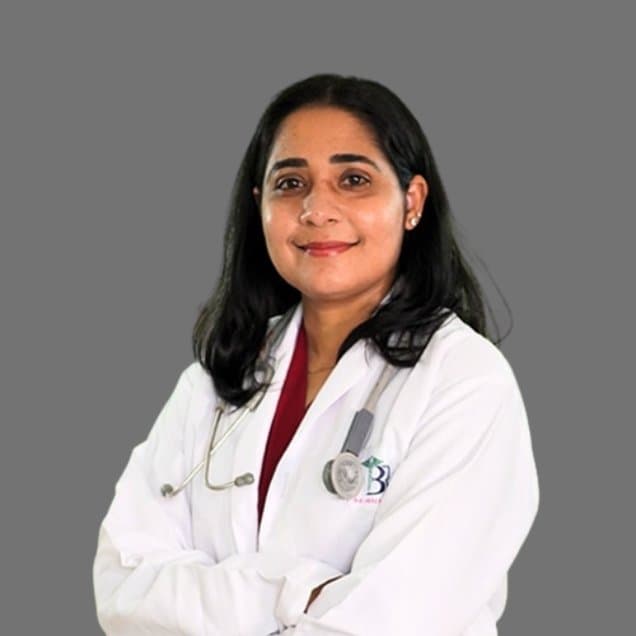
Dr. Kavita Manchanda
MBBS, MS (OBG), DNB (OBG), FNB (Reproductive Medicine). Fertility and IVF specialist with 15+ years of experience in male and female fertility, IUI, IVF, TESA, laparoscopy, hysteroscopy, pre-conception and antenatal care. Consults at Penicillin Clinic, Kamla Nagar, New Delhi.
This article is for general information and does not replace a personal consultation. Every patient is different, so please speak to a qualified doctor about your situation.