
If your doctor has suggested a laparoscopy as part of your fertility work-up, you probably have questions. Is surgery really needed? Will it hurt? How many days off will I need, and what do I tell people at home? These are fair concerns, and knowing what the procedure involves makes the decision easier.
This guide explains what fertility laparoscopy is, when it is advised, how it is done and what recovery looks like. It is meant for women looking for laparoscopy in Delhi from a doctor who also manages their fertility treatment.
What is fertility laparoscopy?
Laparoscopy is keyhole surgery. A thin telescope with a camera, the laparoscope, goes in through a small cut near the navel. The doctor then sees the uterus, fallopian tubes and ovaries clearly on a screen.
In fertility care, laparoscopy can be diagnostic, to find the cause of infertility, and operative, to treat the problem in the same sitting. That combination is its main advantage, because many conditions that affect fertility cannot be fully seen on ultrasound.
When is laparoscopy advised for infertility?
Not every couple needs it. It may be recommended when:
- you have symptoms of endometriosis, such as painful periods or pain during intercourse (see our guide on endometriosis and fertility)
- an HSG suggests blocked tubes or a hydrosalpinx (see blocked fallopian tubes treatment)
- you have an ovarian cyst that needs assessing or removing
- you have fibroids affecting fertility that are suitable for keyhole removal (more in fibroids and fertility)
- you have had a pelvic infection or surgery in the past, which suggests adhesions
- you have PCOS that has not responded to ovulation medicines, where ovarian drilling may be considered
- you have unexplained infertility and other treatments have not worked
Sometimes going straight to IVF is wiser than surgery, particularly when age or low egg reserve make time important. We will talk through both options openly with you.
How it works, step by step
Before the procedure
- Consultation and tests: blood tests, an ultrasound and an anaesthesia fitness check.
- Timing: laparoscopy is often planned in the first half of the cycle, after your period ends.
- Fasting: you will be asked not to eat or drink for several hours before surgery.
During the procedure
- You are given general anaesthesia, so you are asleep.
- A small cut is made near the navel and the abdomen is gently filled with carbon dioxide gas to create space.
- The laparoscope goes in, and one or two more tiny cuts may be made for instruments.
- The doctor examines the pelvis and may pass a blue dye through the cervix to check whether the tubes are open.
- Problems found, such as endometriosis, adhesions or a cyst, are treated where appropriate.
- Often a hysteroscopy is done at the same time to check inside the uterus. Read more on hysteroscopy for infertility.
Questions to ask before surgery
- What do you expect to find and treat?
- Will my ovaries be operated on, and how will my egg reserve be protected?
- How long will I stay, and when can I go back to work?
- What is the plan afterwards: trying naturally, IUI or IVF?
Most fertility laparoscopies take between 30 minutes and a couple of hours, depending on what needs doing.
Recovery and aftercare
Laparoscopy is designed for a quicker recovery than open surgery.
- Most women go home the same day or the next.
- Mild pain at the cut sites and some bloating are common for a few days.
- Shoulder-tip pain from the gas is common too. It usually settles in a day or two.
- You can walk around the same day and ease back into your routine.
- Avoid heavy lifting for as long as your doctor advises. That includes buckets of water and shopping bags carried up the stairs.
- Keep the dressings clean and dry, and follow the instructions on bathing and when to remove them.
Call your doctor promptly if you have fever, increasing abdominal pain, heavy bleeding, vomiting, or redness and discharge from the wounds.
Benefits and risks
Benefits
- Accurate diagnosis of conditions that scans can miss
- Diagnosis and treatment in one sitting
- Small scars, less pain and a shorter hospital stay than open surgery
- Clear information for planning the next step, whether that is natural conception, IUI or IVF
Risks
Laparoscopy is generally safe. Like any surgery it carries small risks, such as bleeding, infection, injury to nearby organs and reactions to anaesthesia. Surgery on the ovaries also needs care to protect egg reserve. Your doctor will go through these risks before you sign the consent form.
After surgery you will get a report of what was found and done. Keep it safe. It is valuable for planning any future treatment, including IVF in Delhi if that becomes the next step, so bring it to the follow-up visit, usually one to two weeks later.
Choosing a laparoscopy surgeon in North Delhi
For fertility, it helps when the doctor who operates is also the one who plans your treatment afterwards. Women from Kamla Nagar, Civil Lines, Roop Nagar, GTB Nagar, Pitampura and Rohini can consult Dr. Kavita Manchanda, who holds MBBS, MS (OBG), DNB (OBG) and FNB (Reproductive Medicine) and has more than 15 years of experience in laparoscopy, hysteroscopy and assisted reproduction. See her specialities.
Planning fertility laparoscopy with Dr. Kavita in Kamla Nagar, Delhi
If you have been advised laparoscopy, or want to know if you need it at all, a detailed discussion will clear up your doubts. Dr. Kavita Manchanda consults in Hindi and English at Penicillin Clinic, A-86, Central, Block A, Kamla Nagar, New Delhi. Book your consultation and plan your next step with a clear head.
Frequently asked questions
Yes. Fertility laparoscopy is usually done under general anaesthesia, so you are asleep and feel no pain during the procedure. An anaesthetist checks your fitness beforehand.
Most women go home the same day or the next. Light daily activity is usually fine within a few days, and many are back at a desk job in about a week. Recovery takes longer if a more extensive procedure was needed.
No. Laparoscopy uses small cuts, usually one near the navel and one or two lower on the abdomen. These normally heal into small, faint marks.
It depends on what was done. After a diagnostic laparoscopy or a simple procedure, many couples can try from the next cycle. Your doctor will give you the timing and tell you whether IUI or IVF is the next step.
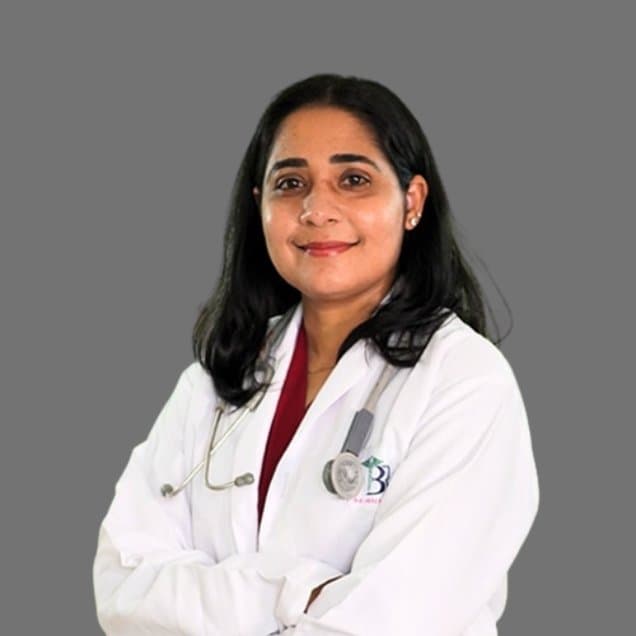
Dr. Kavita Manchanda
MBBS, MS (OBG), DNB (OBG), FNB (Reproductive Medicine). Fertility and IVF specialist with 15+ years of experience in male and female fertility, IUI, IVF, TESA, laparoscopy, hysteroscopy, pre-conception and antenatal care. Consults at Penicillin Clinic, Kamla Nagar, New Delhi.
This article is for general information and does not replace a personal consultation. Every patient is different, so please speak to a qualified doctor about your situation.